
+44 1252 624411 info@liquid-lamination.co.uk Water-based and UV liquid laminates · Inkjet sprays · Coating machines
Applications
Fine art papers are chosen for their surface: the tooth, the matt depth and the way ink sits in the coating. Those same qualities make them harder to protect than canvas or film. Paper is absorbent and sensitive to water, so most water-based laminates are not suitable for it. This page explains which coatings are designed for fine art paper and how to apply them without losing the character of the print.
Canvas and film prints are often water-resistant, which opens up the full range of water-based coatings. Paper is different. Landor’s guidance is that paper substrates are vulnerable to water, as are inkjet receptive coatings and inks that are not water-resistant. Wetting the surface of a paper print will usually make it cockle or warp, and Landor notes that its ColourShield water-based coatings usually require non-porous materials, not paper.
That is why paper is the main exception to Landor’s general aim of moving customers towards water-based products. For paper, a solvent-based coating is usually necessary, both to protect dye and pigment-dye blends and to avoid distorting the sheet.
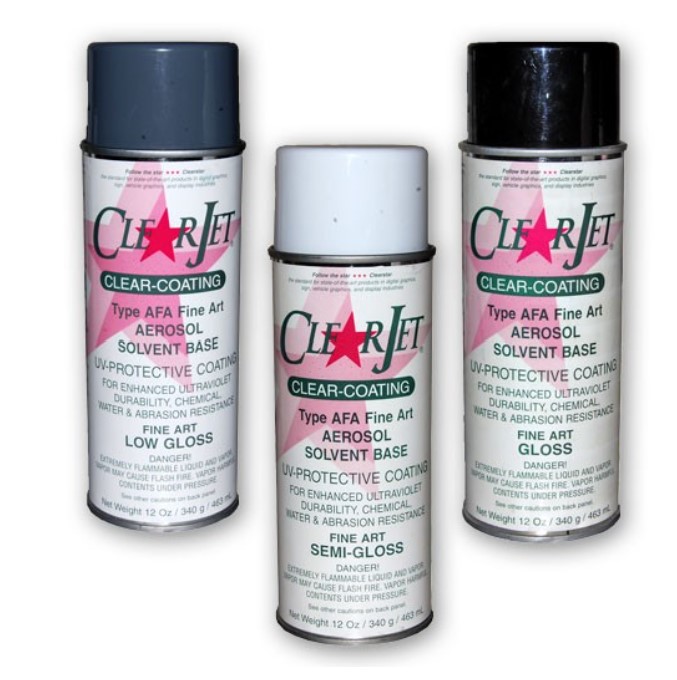
ClearJet AFA is a ready-to-use solvent-based spray developed for the fine art, photographic and professional markets. It is formulated to penetrate the surface and bond with the ink and media, and is designed to protect fine art reproductions and hand-painted artworks against water, chemicals and abrasion, while helping preserve colour under UV light.
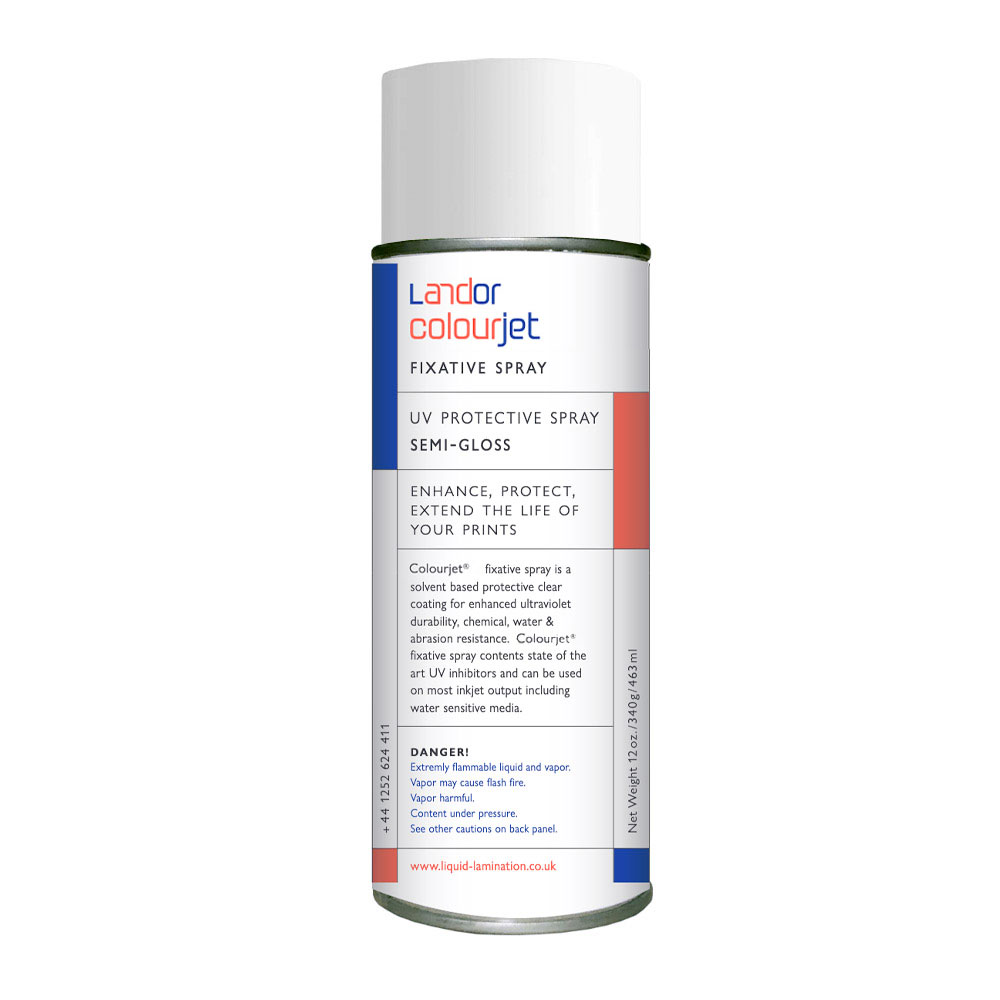
For other inkjet papers and films that are not fine art media, Landor suggests the ClearJet A2000 series instead. Landor’s own tests indicate these sprays can give as much as double the life of an unprotected print.
The reason many artists choose a matt or textured paper is the way it looks under gallery light. A coating should support that, not replace it with an unwanted sheen. Landor notes that matt finishes are often chosen for fine-art reproduction and environments with strong overhead lighting, and that for fine art prints a finish should preserve colour, detail and surface character rather than introduce unnecessary gloss or texture.
In practice:
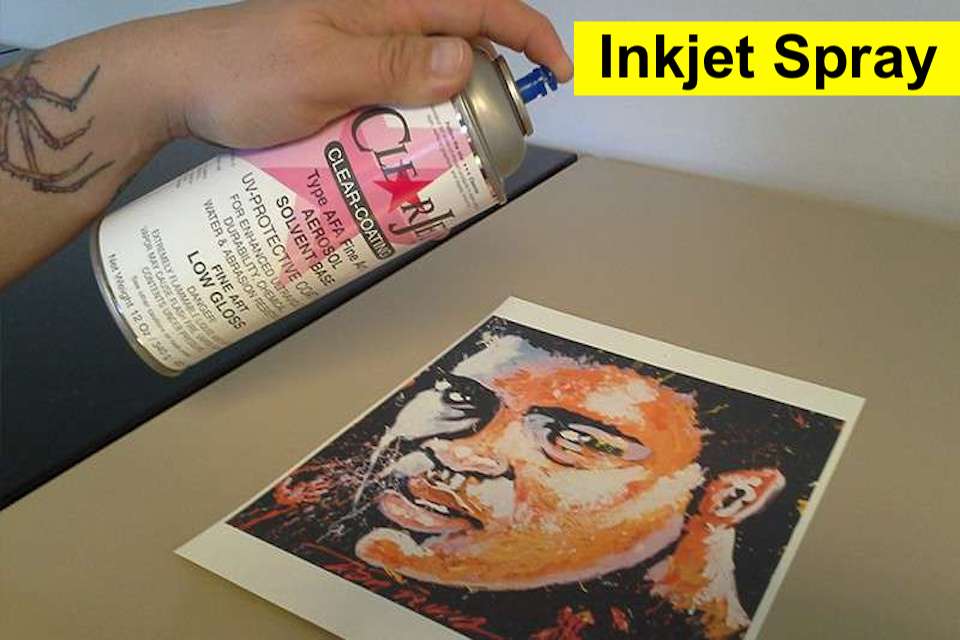
Paper rewards a light touch. Landor’s general spraying advice is a very light first coat, sometimes called a tack coat, held about 6 to 10 inches from the print, followed by a second, heavier coat for good protection. Keep speed and distance consistent across the sheet so the finish is even. Expect some loss to the air; Landor’s estimate for a 463ml can is 1 to 2 m² allowing for two coats.
A few general good practices help too:
Large paper prints are fragile, and photographer Martin Thompson notes that above a certain size paper needs protecting behind glass. A coating does not remove the case for good framing, but it adds resistance to moisture, handling and UV fade during packing, transport and display, and it means a print that escapes its frame is less vulnerable. For editions, coat every print in the same way so the finish is consistent across the set. If you work on canvas as well as paper, Landor’s canvas and fine art coatings page covers stretching and water-resistant canvases, where different products apply.
Landor generally advises against it. Paper is absorbent and sensitive to water, and its water-based coatings usually require non-porous materials. Use a solvent-based product designed for paper, such as ClearJet AFA.
Not if you choose the low gloss (matt) version and apply thin, even coats. Test on a strip of the same paper first.
Landor describes ClearJet AFA as suitable for enhancing hand-painted artworks as well as fine art reproductions. Test on a small area or a sample first, as paints and papers vary.
Drying depends on the product and room conditions. Check the product data sheet, or contact Landor, before handling or framing.
Call +44 1252 624411 or email info@liquid-lamination.co.uk for advice, samples and pricing.
