+44 1252 624411 info@liquid-lamination.co.uk Water-based and UV liquid laminates · Inkjet sprays · Coating machines
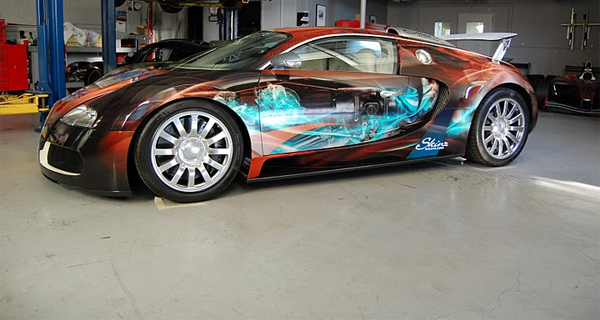
Vehicle advertising and branding have become a very popular choice, thanks to their relative ease of installation and their promotional and branding benefits. This has also made them an affordable solution.
Traditional vinyl wraps rely on cast PVC films with solvent-based adhesive, which require a compatible cast overlaminate film for protection. The overlaminate enhances and protects the print, providing the durability needed to resist day-to-day wear and tear, weather and abrasion that would otherwise damage or destroy the printed film.
Film laminates are a popular way to protect the printed image wherever the risk or environment would otherwise cause damage.
Cast films are expensive, because they are premium films that must be ultra-flexible and conformable to suit the vehicle. Downgrading to a lower-grade film to save money is commonplace among vehicle wrappers. Understandably, alongside their expertise with wrapping films, many are tempted to save money with lower-grade, similarly compatible materials. Polymeric PVC films are a typical alternative.
All PVC films carry an environmental disadvantage, despite their pleasing effects and their affordability for producing impactful graphics.
Liquid lamination provides an eco-friendly alternative to cast PVC overlaminates, reducing environmental impact. Liquid laminates are very flexible and elastic, and work very well with any type of printed, flexible wrapping film.
One unique feature of liquid lamination is its ability to protect and extend the life of PVC banners, where film lamination simply will not work. This is why almost all external PVC flex-face films, truck curtains, bouncy castles and other vehicle-grade printed PVC materials are protected with liquid lamination.

Most print houses need to protect flexible or rigid materials, so they usually already own a film laminator. It is understandable, then, that film is their usual method of print protection. But film lamination has its disadvantages: it does not work well on textured surfaces, and it adds rigidity to the substrates it is applied to.
One of the main reasons for hesitancy about liquid-laminated vehicle wraps is the initial investment in coating equipment, along with training and operator confidence.
However, the proven performance and eco-friendly benefits of liquid lamination should lead more producers to adopt it over the next few years.
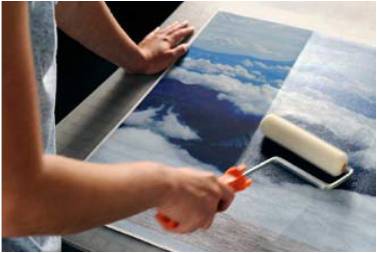
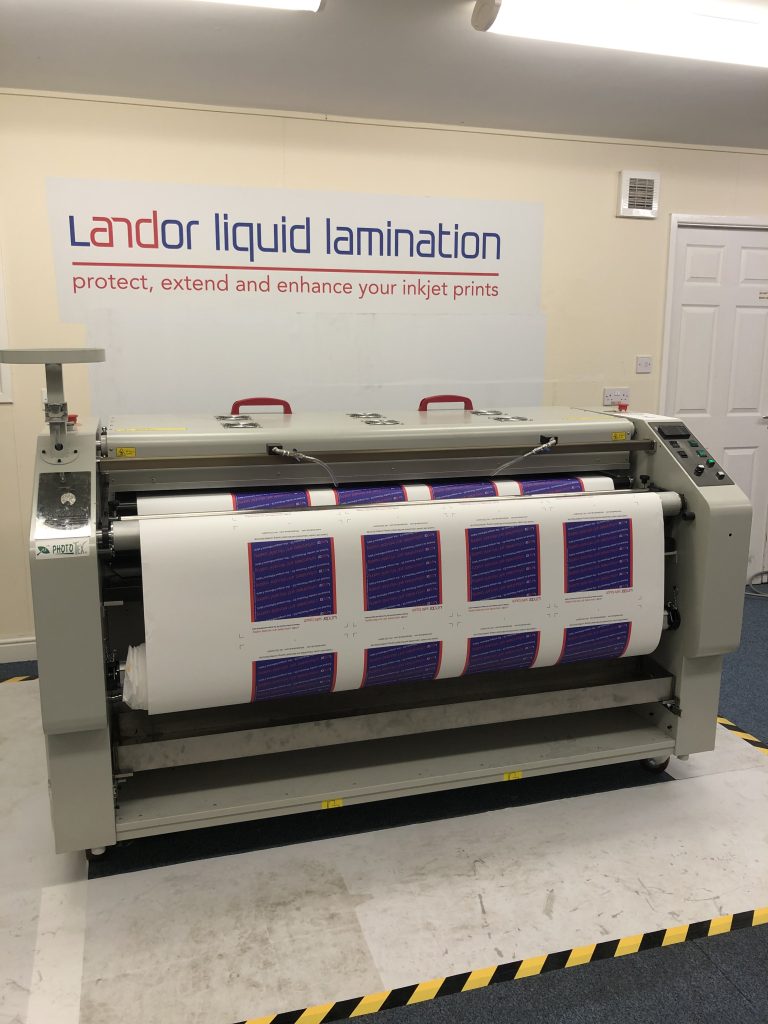
Coating is an efficient, productive and profitable add-on, not just for vehicle wraps but for extending the life and protection of printed images generally. You do not need to invest in a liquid laminator, but coating large runs will be more productive and cost-effective with a liquid lamination coater.
In today’s environmentally conscious workplace, using liquid lamination instead of cast film is another step towards reducing PVC use, and it eliminates the use of VOCs.
Liquid lamination gives flexible media an elasticity, flexibility and softness that film lamination cannot. The touch and feel of textured materials remain unchanged, and liquid lamination coats fabrics and textured materials as well as smooth ones. Our water-based coating technology also provides added UV resistance.
In conclusion, liquid-laminated vehicle wraps are a sustainable, eco-friendly solution for businesses looking to enhance their brand visibility while minimising their environmental impact. With superior durability, ease of application by hand or machine, and a reduced environmental footprint, liquid laminates offer a win-win solution with advantages that film lamination cannot match. Even rigid materials benefit from liquid lamination over film laminates, especially UV-printed substrates.
So, the next time you hit the road, consider the environmental advantages of liquid-laminated vehicle wraps – because sustainability drives success.
En France, appelez-nous directement :