
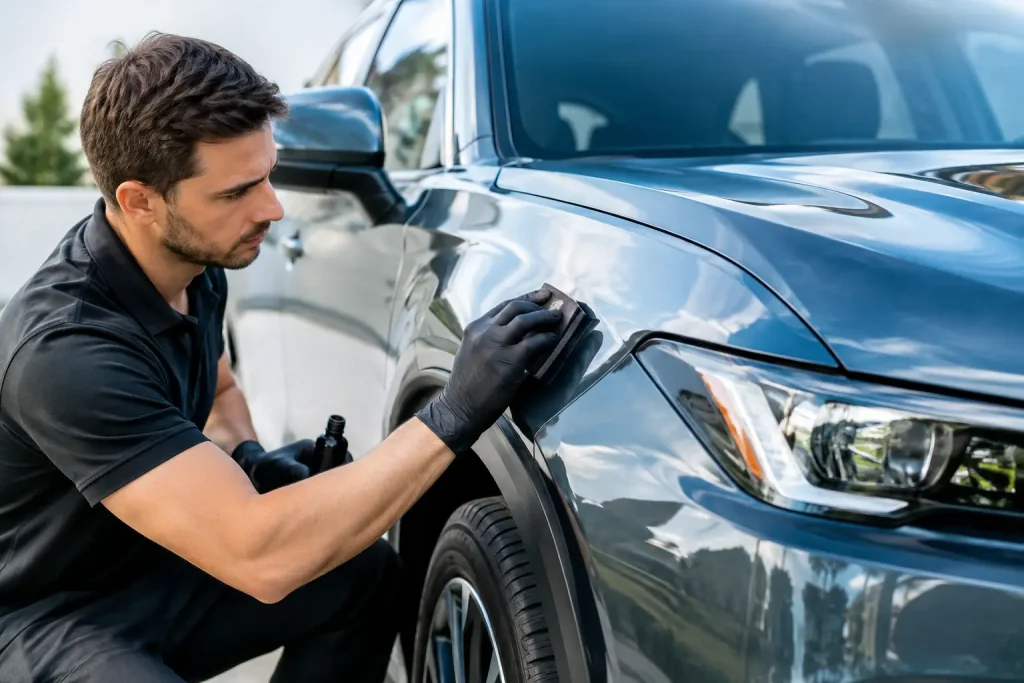
A freshly wrapped vehicle can leave the workshop with exceptional colour, crisp detail and a premium finish. The demanding part starts once it reaches the road. Vehicle wrap protective coating adds a clear, durable defence against the scuffs, UV exposure, road film, fuel splash, wash chemicals and repeated handling that steadily reduce the value of printed graphics.
For fleet operators, signmakers and vehicle livery specialists, this is not simply about making a wrap look glossy. It is about preserving the printed image, reducing avoidable replacement work and keeping branded vehicles presentable for longer. The right coating system must protect without obscuring detail, altering the intended appearance or making practical application difficult.
Why vehicle wraps need more than a good print
Vehicle graphics work in one of the harshest environments for printed media. A van may be washed weekly, parked outdoors every day and driven through rain, salt spray, diesel residue, mud and urban pollution. Delivery fleets face loading-bay contact, branches, trolley scuffs and constant door-handle use. Lorry curtains and high-mileage commercial graphics experience abrasion on a much larger scale.
A quality print film and compatible ink provide the foundation, but they do not remove every risk. Unprotected printed surfaces can become dulled by repeated cleaning, marked by incidental contact or faded by prolonged ultraviolet exposure. Edges, high-touch areas and sections close to wheel arches are especially vulnerable.
A liquid protective coating forms a clear protective layer over the printed graphic. It can enhance colour density and finish while helping the surface withstand day-to-day wear. Unlike an adhesive finishing film, a liquid system follows the printed surface without adding another film layer that may be unsuitable for particular substrates, contours or production requirements.
What a vehicle wrap protective coating can defend against
The exact performance depends on the selected coating, print technology, substrate and application process. However, the principal aim is consistent: enhance, protect, preserve and extend the useful life of the graphic.
Abrasion, scuffs and handling marks
Fleet liveries are repeatedly exposed to mechanical wear. Drivers lean against doors, packages brush side panels and cleaning equipment passes across the same surfaces week after week. A suitable coating improves surface resistance, helping graphics retain a cleaner, more professional appearance in service.
This matters particularly for high-contact zones such as door surrounds, rear loading areas, tail lifts and fuel-access panels. A coating cannot prevent damage caused by a severe impact or torn vinyl, but it can reduce the visible effect of routine abrasion that otherwise accumulates quickly.
UV fading and weathering
Outdoor graphics face continual sunlight, fluctuating temperatures and moisture. Dark colours, intense brand shades and photographic imagery can all suffer where UV exposure is prolonged. A protective coating can contribute to improved UV resistance, helping preserve the colour and contrast that made the vehicle livery effective in the first place.
The level of protection required depends on where and how the vehicle operates. A locally used van stored indoors overnight has a different exposure profile from a fleet travelling across southern Europe or parked outside year-round. Coating selection should reflect that reality rather than rely on a one-size-fits-all specification.
Road dirt, pollution and wash chemicals
Road film is more than a cosmetic problem. Fine grit and contamination can abrade the surface during cleaning, while harsh detergents may gradually affect appearance if the wrap is not specified and maintained correctly. Coatings designed for demanding printed applications can help create a more resilient, cleanable surface.
This does not mean any cleaning chemical is safe. Operators should still use approved, appropriately diluted cleaners and avoid aggressive solvents, abrasive pads and high-pressure washing too close to edges. Protective coating improves the margin for everyday cleaning; it does not replace correct vehicle-care procedures.
Graffiti and unwanted marking
Vehicles used in public spaces, transport environments and urban locations may be vulnerable to graffiti or marker pen damage. Where this is a credible operational risk, a specialist anti-graffiti coating strategy can make removal easier while reducing the likelihood of permanent staining or costly panel replacement.
It is worth identifying this requirement before production. A standard protective finish may be right for most fleet graphics, whereas a high-risk public-facing vehicle can justify a more specialised system from the outset.
Choosing the right finish for the job
Protection and appearance must work together. Gloss can intensify colour and deliver a polished, high-impact look, which suits many commercial liveries and promotional wraps. Matt finishes reduce glare and can support a more understated brand presentation. Satin often offers a practical middle ground, retaining depth while softening reflections.
The finish should be selected alongside the media, ink and intended vehicle use. A finish that looks excellent on a flat printed sample may behave differently on textured cast film, corrugated lorry curtains or graphics applied around complex vehicle contours. Always assess compatibility and carry out application testing before committing to volume work.
Water-based liquid coatings can be an effective choice where businesses want a lower-impact alternative to plastic overlaminating films. They offer a practical route to protection without introducing an additional adhesive film layer. UV-curable systems may be better suited to production environments needing rapid curing, controlled output and high throughput. The best answer depends on equipment, job volume, substrate and finish specification.
Application quality determines coating performance
Even a technically capable coating cannot compensate for poor preparation. The printed graphic must be fully dry and suitably cured before coating, particularly where solvent, latex or UV ink systems are involved. Residual ink components, contamination or insufficient drying can compromise adhesion, appearance and long-term durability.
Surface preparation should be methodical. Keep the work area clean, control dust, inspect prints for defects and follow the recommended coating weight and application method. An uneven coat can create visual inconsistency, while insufficient coverage may leave the surface below the required protection level.
For smaller workshops, a starter kit and a controlled manual process can be a sensible way to establish capability. For regular fleet production, purpose-designed coating machinery helps improve consistency, reduce waste and make finishing easier to repeat across multiple vehicles and panels. Demonstrations and technical trials are particularly valuable when introducing a liquid system to an existing wrap workflow.
Do not treat the wrap, ink and coating as separate decisions
The most reliable vehicle graphic is a compatible system: print media, ink, adhesive, protective coating and installation method all need to work together. Problems often arise when the coating is considered only at the end of production, after material decisions have already been made.
Ask practical questions at the quotation stage. Is the vehicle likely to receive frequent commercial washing? Will it operate near the coast, on building sites or in city-centre traffic? Is the client expecting a two-year campaign or a longer fleet-life programme? Does the livery include vulnerable dark colours, unprotected ink areas or high-touch branding? These answers help determine whether the priority is maximum abrasion resistance, UV protection, chemical resistance, anti-graffiti performance or a particular visual finish.
Landor Liquid Lamination supports this application-led approach through protective liquid coating systems developed for printed graphics in demanding environments. ClearShield liquid laminate, for example, provides a film-free route to enhancing and protecting suitable printed vehicle graphics where conventional laminate films are not the preferred answer.
Build protection into the commercial case
A coating adds a production step and a material cost, so it should be justified in terms the end customer understands. The commercial value is found in fewer premature replacements, reduced reprint risk, better brand presentation and graphics that continue to work harder throughout their service life.
For a single short-term promotional wrap, a basic finish may be sufficient. For a national fleet, public-service vehicle or high-mileage lorry operation, the consequences of deteriorating graphics are greater. Dirty, faded or scuffed branding creates the wrong impression and can turn a planned maintenance cycle into an unplanned replacement cost.
Protect the image before the vehicle reaches the road. A well-specified coating gives printed graphics the resilience to keep representing the brand as intended, mile after mile.
