
A freshly applied fleet livery can look exceptional when it leaves the fitting bay. Six months of motorway spray, winter salt, fuel forecourts, brush washing and repeated handling can tell a very different story. This vehicle graphics maintenance guide is designed for print professionals, installers and fleet operators who need graphics to remain clean, legible and commercially effective for their intended service life.
Vehicle graphics do not usually fail because of one dramatic incident. They lose impact through accumulated abrasion, ingrained road film, UV exposure, poor cleaning practice and damage at vulnerable edges. A planned maintenance routine protects the appearance of the printed image while reducing avoidable replacement work, vehicle downtime and material waste.
Start with the finish, not the wash bucket
Maintenance begins when the graphic is specified, printed and finished. The coating or over-laminate must suit the vehicle’s operating environment, expected cleaning regime and the graphic substrate. A short-term promotional wrap on a lightly used car has very different demands from lorry curtains, delivery vans or municipal fleet graphics exposed to daily wash cycles.
Liquid protective coatings can provide a practical alternative where conventional plastic laminate films are unsuitable, difficult to apply or likely to perform poorly over textured, flexible or challenging surfaces. The right water-based or UV-curable coating enhances the print finish and creates a protective layer against abrasion, water, pollution, UV fading and routine handling. It also avoids adding another plastic film layer to the finished graphic.
Confirm the coating has fully cured before the vehicle enters service or is washed. Cure times vary according to the system, substrate, ink set, coating weight, temperature and humidity. Rushing this stage can leave the surface more vulnerable to marking, moisture ingress or reduced durability. Keep the print, ink, coating and application records together so maintenance teams know exactly what they are caring for.
Vehicle graphics maintenance guide: cleaning without damage
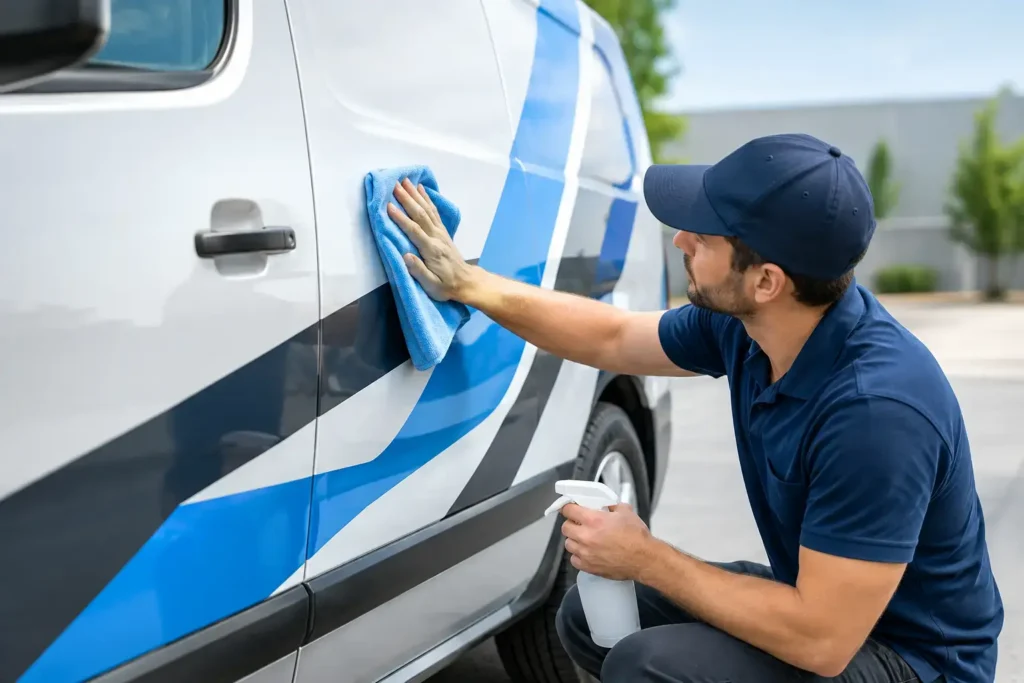
The safest cleaning method is usually regular, low-pressure washing with clean water, a pH-neutral vehicle shampoo and a soft microfibre mitt or cloth. The objective is to lift contaminants away from the surface, not scrub them into it. Dirt contains abrasive particles, particularly after wet road use, construction-site access or urban driving.
Rinse the vehicle first to remove loose grit. Wash from the top down, working in manageable sections and rinsing the mitt frequently. Then rinse thoroughly and dry with clean, soft microfibre towels or allow the surface to air dry in a clean area. Washing little and often is more effective than waiting until road film has bonded to the coating.
Avoid aggressive traffic-film removers, solvent-heavy cleaners, abrasive pads and powders unless the coating supplier has confirmed compatibility. These products may dull gloss, alter matt finishes, weaken the protective layer or stain unprotected graphic edges. Petrol, diesel, hydraulic fluid, bird droppings, tree sap and insect residue should be removed promptly using a suitable approved cleaner, followed by a gentle rinse.
Automatic vehicle washes need careful consideration. Soft-cloth systems may be acceptable for some finished graphics, but repeated mechanical contact still increases the risk of fine scratching and edge lift over time. Brush washes are a poor choice for wraps, decals and digitally printed liveries. High-pressure washing can also be used incorrectly: never direct a concentrated jet at graphic edges, seams, overlaps, rivets or damaged areas, and maintain a sensible stand-off distance.
Treat matt and textured finishes differently
Gloss graphics tend to reveal swirl marks and fine scratches. Matt finishes can show polishing marks, shiny patches and uneven cleaning more readily. Textured films, curtain materials and embossed surfaces can retain grime in low points where a cloth cannot reach.
Use cleaning products approved for the specific finish and test any new chemical on an inconspicuous area. Do not use waxes or polishes on matt surfaces unless they are expressly designed for them. A product that makes a gloss finish appear deeper may permanently change the visual character of a matt livery.
Inspect high-risk areas before they become failures
A five-minute walk-round inspection can prevent a small defect from becoming a full panel replacement. Build the check into routine vehicle cleaning, driver handovers or scheduled fleet inspections. Focus on leading edges, door cups, handles, loading areas, fuel fillers, wheel arches, lower panels, rear doors and areas around rivets or panel joins.
Look for edge lift, scuffs, cracking, whitening, bubbling, trapped moisture, ink fade and loss of surface sheen. On curtain-sided vehicles, inspect sections that repeatedly flex or rub against straps, buckles and loading equipment. On vans, check sliding-door contact points and areas regularly touched by drivers and delivery staff.
Record the location and likely cause of any damage with photographs. This creates a useful maintenance history and helps distinguish between normal wear, a cleaning issue, a fitting defect or an application mismatch. It also allows replacement graphics to be planned before branding becomes visibly inconsistent across the fleet.
Do not simply press down a lifted edge and hope it holds. Dirt and moisture may already be beneath the graphic. The correct repair depends on the substrate, adhesive condition, coating system and size of the affected area. A qualified graphics installer should assess whether a local repair is viable or whether the section needs replacing.
Control the environments that shorten graphic life
UV exposure is unavoidable for external fleets, but it is not the only environmental pressure. Coastal routes introduce salt, city traffic brings soot and pollution, while depot yards can expose vehicles to fuel, oils, dust and repeated contact with equipment. Vehicles parked under trees face sap and bird droppings. Those used in construction, waste, agricultural or distribution work may encounter abrasive mud and chemical residues every day.
Match the maintenance frequency to that reality. A showroom vehicle might need light cleaning and periodic inspection. A courier van operating six days a week in congested urban areas needs a much more regular routine. A vehicle that carries cleaning chemicals, food products or industrial materials may require an approved cleaning specification that balances hygiene requirements with graphic protection.
Parking and storage also matter. Covered parking reduces UV load and makes cleaning easier, but it is not always available. Where fleets remain outdoors, a protective coating with suitable UV and weathering performance becomes even more valuable. Keeping graphics clean helps too: contamination on the surface can intensify staining and make UV-driven deterioration more noticeable.
Protect the coating during fleet operations
Graphics are often damaged by operational habits rather than the road. Drivers may rest parcels against rear-door branding, lean equipment against printed panels or scrape decals with ice scrapers. Depot teams may use whatever cleaner is nearby, without knowing whether it is suitable for the graphic finish.
Give drivers and cleaning teams a simple vehicle-care instruction: use approved cleaning products, report damage early, avoid stickers and tapes on printed areas, and never use blades or abrasive tools to remove dirt. This is not unnecessary administration. It protects the asset carrying the brand message and avoids turning routine cleaning into an unplanned graphics job.
For high-touch fleet areas, choose protective finishes that can tolerate repeated handling and appropriate cleaning. Where vandalism is a risk, anti-graffiti coatings can support easier removal of unwanted markings without sacrificing the underlying printed image. In controlled environments, such as healthcare transport or public-service vehicles, anti-microbial coating options may also be relevant to the wider surface-protection specification.
Know when cleaning is no longer enough
Surface dirt, light scuffs and road film are maintenance issues. Widespread fading, cracking, coating loss, persistent staining or adhesive failure are signs that a graphic is reaching the end of its practical life. Continuing to clean aggressively at this stage usually makes the visual problem worse.
Replacement decisions should consider more than appearance. A faded vehicle livery weakens brand consistency, while damaged safety markings, instructional graphics or regulatory information can create operational risk. Replacing one badly degraded panel may be more cost-effective than allowing a whole vehicle to present a poor standard.
Landor Liquid Lamination can help print producers and fleet graphics specialists select coating systems around the actual demands of the job, whether that is flexible curtain work, high-mileage commercial vehicles or premium wrap finishes. The strongest maintenance plan is always one that starts with the right protective finish.
Treat every vehicle graphic as a working printed surface, not a decorative extra. Clean it with care, inspect it before defects spread, and specify protection that reflects the miles, weather and handling it will face.
