
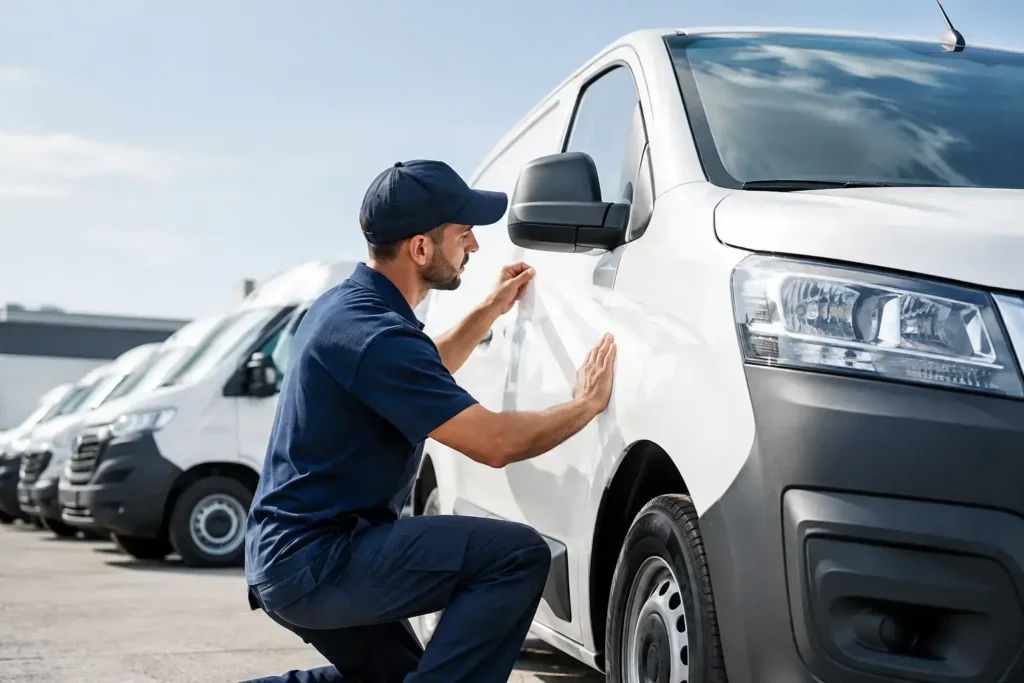
A fleet graphic rarely fails all at once. It starts with dulling along exposed panels, abrasion around door handles, grime trapped in textured areas and small edge scuffs that make a professionally applied livery look tired before its time. Top fleet graphic protection addresses these working-life pressures at the coating stage, preserving the print, the vehicle’s presentation and the investment behind every branded mile.
For fleet operators, signmakers and vehicle livery specialists, appearance is not merely cosmetic. Clear, consistent graphics support brand recognition, vehicle identification and, in some sectors, safety messaging. The protection chosen must therefore suit how the vehicle is actually used, cleaned and stored, not simply how it looks when it leaves the fitting bay.
What Top Fleet Graphic Protection Must Deliver
A protective coating for fleet graphics needs to do more than add gloss or create a pleasant feel. It should form a durable, flexible protective layer that helps defend the printed image against UV exposure, road film, rain, routine washing, fuel splashes, dirt, salt and repeated handling. On delivery vans, service vehicles and articulated lorries, it must also cope with vibration, flexing and the constant movement of people, equipment and cargo around the vehicle.
The best choice depends on the print process, ink set, substrate and application. A coated cast vinyl wrap, for example, has different demands from a digitally printed lorry curtain or rigid panel system. A coating that performs well on a flat external sign may not be the right solution for a highly flexible curtain, deep vehicle recesses or a graphic that will be cleaned with aggressive detergents every week.
Liquid laminate coatings are particularly valuable where conventional plastic overlaminate films are unsuitable, impractical or likely to compromise the finished result. They can protect complex contours and wide-format printed surfaces without adding a separate adhesive film layer. They also offer a practical route for producers seeking to reduce plastic use while retaining abrasion, weather and chemical resistance.
Start With the Vehicle’s Real Exposure
A protection specification should begin with the duty cycle, not a generic material preference. Ask where the vehicles operate, how often they are washed and what contacts their printed surfaces each day. A municipal fleet travelling short urban routes faces kerbside contamination, frequent cleaning and high-touch door areas. A long-haul lorry may spend far more time exposed to UV, rain, road salt and diesel residues.
Washing Is Often the Deciding Factor
Fleet washing is essential, but repeated brush washing and strong cleaning chemistry can quickly reveal weaknesses in an unprotected or poorly finished print. The concern is not only visible scratching. Detergents can gradually reduce surface appearance, while trapped dirt can create a dull, worn finish that undermines the impact of the graphic.
Specify a coating system with cleaning resistance appropriate to the planned regime, then give the operator realistic wash guidance. In many cases, pH-neutral cleaning products, controlled pressure and appropriate stand-off distances will help maintain the finish. There is no value in fitting a premium graphic if its aftercare assumptions do not match the depot’s wash process.
UV Is a Long-Term Commercial Risk
Sunlight does not affect every elevation equally. Bonnet graphics, roof-edge areas and side panels exposed during long daytime routes can fade or lose visual depth sooner than sheltered surfaces. UV-resistant protection helps preserve colour density and contrast, extending the useful life of the image and reducing the need for early replacement.
This matters most where exact brand colours, campaign artwork or mandatory markings must remain legible. Protection cannot improve a weak ink, poorly prepared substrate or unsuitable print profile, but it can help a well-produced graphic retain its intended appearance for longer.
Match the Coating to the Print and Substrate
Fleet protection works best when coating selection is treated as part of the production system. Check ink compatibility, cure requirements, print age, substrate flexibility and the intended finish before committing to full production. A small test area is a sensible precaution, especially where unfamiliar media, inks or cleaning products are involved.
Water-based liquid laminates are often well suited to printed graphics requiring a lower-impact finishing approach and a flexible protective surface. They can be applied by roller, brush or suitable spray equipment, depending on the product, production volume and finish required. Correct application delivers an even coating without the handling challenges of applying a film over large, contoured or textured graphics.
UV-curable coating systems offer another route where speed, controlled production and high-volume throughput are priorities. They cure rapidly under the correct UV equipment, allowing efficient processing in a production environment. However, the equipment investment, operator training and substrate compatibility need proper consideration. Fast curing is useful only when the system is set up to deliver consistent coat weight and complete cure.
For either technology, the objective is the same: a protective layer that bonds reliably, remains appropriate for the material’s movement and maintains the intended visual finish. Landor Liquid Lamination can help producers assess these variables before a fleet roll-out, rather than discovering a compatibility issue after vehicles are already on the road.
Choose Finish for Function, Not Fashion
Gloss, satin and matt finishes each have a place in fleet graphics. Gloss can enhance colour vibrancy and visual depth, making bold branding stand out. Satin provides a more restrained appearance while still supporting cleanability and colour definition. Matt can reduce glare, but it may show marks differently and should be assessed against the fleet’s cleaning routine and operating environment.
Do not assume that a higher-gloss finish is automatically more protective, or that a matt finish is inherently harder wearing. Performance comes from the coating chemistry, correct application and cure, not appearance alone. For vehicle graphics that combine printed areas with existing livery materials, create a physical sample first. The finish should look intentional across the whole vehicle.
Application Quality Determines Protection
Even an appropriate coating can disappoint if it is applied over contamination, at an inconsistent thickness or before the print has properly stabilised. Production controls are therefore as important as product choice. Ensure the printed surface is clean and dry, work within the recommended environmental conditions and allow the specified drying or curing time before fitting, washing or returning the vehicle to service.
Operators should also pay close attention to edges, high-contact zones and areas of extreme contour. Door cups, lower panels, rear access points and loading-side graphics are frequent abrasion zones. These may need additional attention during application, provided the coating system and substrate permit it. The aim is not to apply more material indiscriminately, but to achieve a uniform, fit-for-purpose protective film.
Where production is scaled across multiple vehicles, document the process. Record the print media, ink, coating, application method, coat weight, drying conditions and any cleaning guidance issued to the customer. This makes repeat work more consistent and gives the production team a clear basis for resolving issues quickly.
Protect the Whole Cost of the Fleet Graphic
The price of a coating should be judged against the cost of premature refurbishment. Reprinting, removing and reinstalling vehicle graphics creates material waste, workshop time, vehicle downtime and potential brand inconsistency across the fleet. If the livery supports contracts, public-facing services or regulated information, replacement can also become an operational inconvenience rather than a simple aesthetic refresh.
A well-selected liquid protection system can help extend the serviceable life of printed fleet graphics and reduce the frequency of replacement. That does not mean every vehicle needs the same specification. Short-term promotional wraps, leased vehicles and lightly used local vans may justify a different protection level from a nationwide fleet expected to work hard for several years. The commercially sensible answer is proportionate protection, based on exposure and replacement risk.
A Practical Specification Checklist
Before approving a fleet graphic protection system, confirm the print technology and ink compatibility, the vehicle substrate or livery material, expected UV and weather exposure, wash frequency, likely chemical contact, required finish and how much flexibility the application demands. Also establish whether the job will be coated before installation, after installation or through a controlled production workflow.
For demanding fleet programmes, a demonstration and representative sample panel are worthwhile. Test the finished surface under realistic conditions: clean it, flex it where appropriate, inspect it in daylight and compare it with the customer’s approved colour and gloss expectations. This is far more useful than choosing protection from a product description alone.
Fleet graphics are expected to work as hard as the vehicles carrying them. Specify protection around the route, wash bay, weather and workload, and the finished livery will have a far better chance of staying sharp, readable and worth seeing long after installation.
