
+44 1252 624411 info@liquid-lamination.co.uk Water-based and UV liquid laminates · Inkjet sprays · Coating machines
Applications
A mural is judged as one continuous image, so a scuff at hip height or a panel that catches the light differently can undermine the whole wall. Protecting large-format wall art is less about a single product and more about planning the media, the coating and the installation together. This page looks at how Landor’s wallcovering coatings and Phototex self-adhesive fabric fit into mural work.
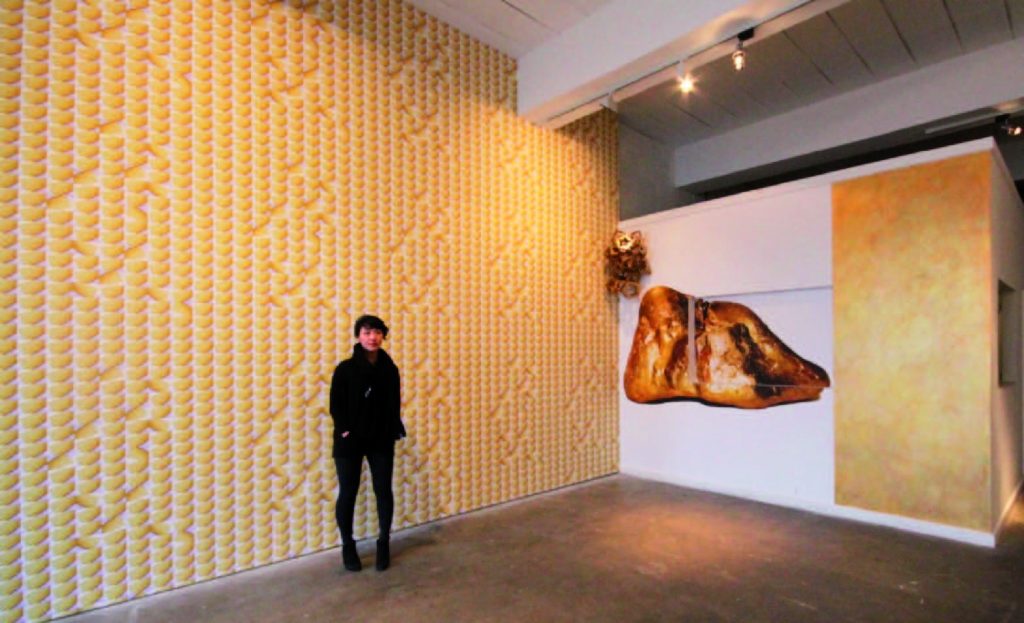
Small prints can be coated on a bench and inspected in seconds. A mural may run across several drops, wrap a corner or fill a lobby from floor to ceiling, and every one of those panels has to match. Lower areas pick up contact from bags, chairs and passing hands, while the upper sections may sit under strong downlighting or near glazing.
Landor’s guidance on protective coatings for digital wallpaper stresses edge-to-edge consistency on multi-panel murals, because small variations in coat weight can become visible under raking light. Planning how and when the wall will be coated is therefore as important as choosing the coating itself.
Many mural projects featured on this site use Phototex, the self-adhesive fabric distributed by Landor UK. It has a receptive coating for detailed inkjet printing, and its adhesive is designed to be removed and reapplied without leaving residue on the wall. It is PVC-free and recyclable, which has made it a choice for clients with sustainability requirements.
Examples include an entrance lobby project at Oval Space in East London, produced by Metro Imaging, and a mural for the Imperial War Museum North in Manchester. For the museum installation, Landor supplied the Opaque version of Phototex, which helps hide overlaps and makes complex graphics easier to line up across drops. One artist removed her Phototex installation, stored it rolled onto a non-porous roll and reinstalled it at a second venue.
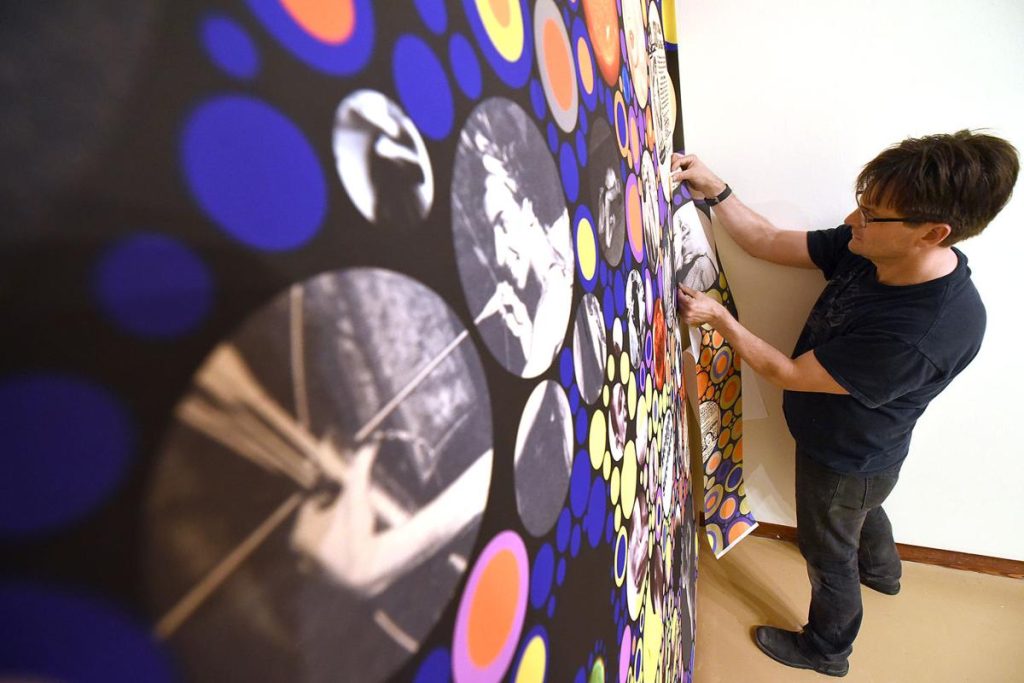
For wallcoverings, Landor recommends installing first and then hand-applying Wallpaper Matt over the finished wall where the aim is the best protection and a wipe-clean surface. Coating in place seals across the joins and means the whole mural is finished in one consistent pass. Working on a vertical surface also reduces the chance of dust settling on the wet coating.
Coating on the bench, by hand or with a coating machine, can suit murals that will be moved, stored or reinstalled, or jobs where site time is limited. Landor’s 1.6m water-based coater is listed for digital wallcoverings, and a 3.3m version is available for larger-scale work. Whichever route you choose, coat a sample of the actual print first and confirm the result before committing the full wall.
Landor’s wallcovering coatings come as Wallpaper Matt, Wallpaper Satin and Wallpaper Gloss. Wallpaper Matt is a low-sheen, water-based coating designed for inkjet-printed wallcoverings, including Phototex, vinyl, paste-the-wall papers and wall fabrics, with UV inhibitors and added resistance to abrasion.
Textured wallcoverings should always be tested, because a coating must protect the print without pooling in the texture.
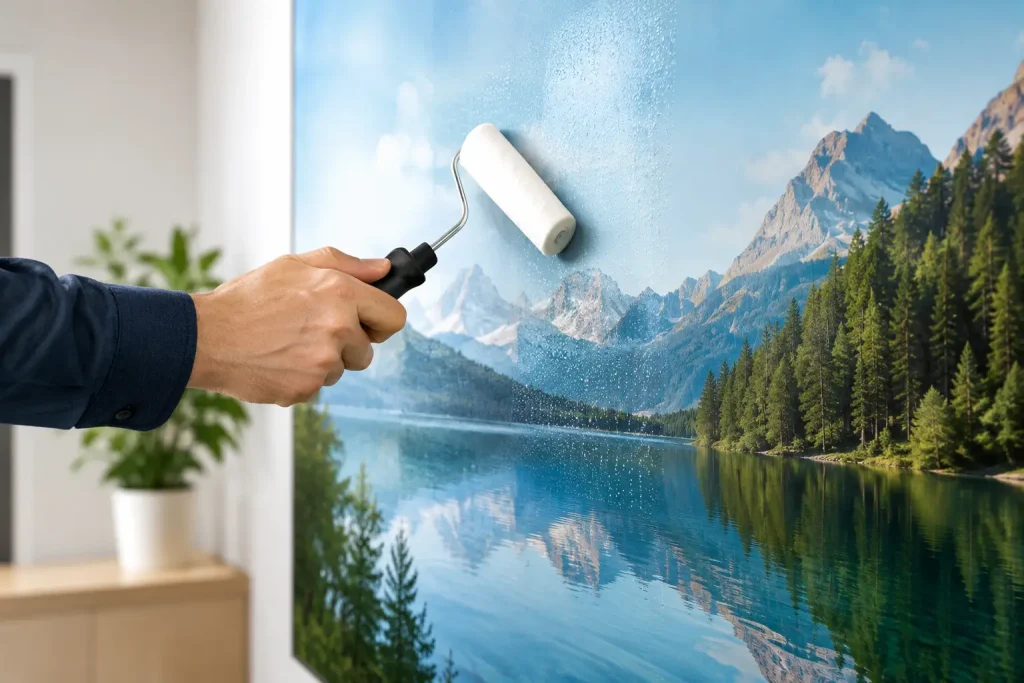
Liquid laminates can be applied with hand rollers, paint pads, brushes or spray, so there is no hard size limit for hand work: anything that can be hung on a wall or laid out on the floor can be coated. Work in consistent sections, keep a wet edge and avoid going back over areas that have started to dry. Stir the coating thoroughly before use, particularly satin and matt versions, but do not shake it, as this can introduce bubbles.
Plan the order of work so that each drop receives the same treatment, and check the finished wall in angled light before handing it over. Coat weight, drying conditions and recoat times should come from the product data sheet; if you need figures for a specific job, ask Landor.
A coated mural is easier to look after, but the people responsible for the space need clear care instructions. Prompt removal of marks with a soft cloth and a mild cleaner is generally preferable to letting dirt build up, and abrasive pads or unapproved solvents should be avoided. If the site uses specialist disinfectants, test them on a retained sample first. A short written note at handover helps the wall stay as the artist intended for longer.
Yes. Landor’s Wallpaper Matt is designed for inkjet wallcoverings including Phototex, and Landor recommends installing the wallcovering first and then hand-applying the coating for the best protection and a wipe-clean surface. Test on a sample before coating the whole wall.
Matt is often chosen because it reduces reflections, but satin can be a better fit where the wall will be wiped regularly. Wallpaper Matt, Satin and Gloss are all available, so approve a coated sample under the site’s lighting.
Not for hand application. Large graphics can be coated with rollers, paint pads, brushes or spray at any size you can hang on a wall or lay out on the floor. Machine coating is limited by the width of the coater.
Phototex is designed to be removed and reapplied without residue, and one artist has reinstalled the same Phototex work at a second venue. If a mural is intended for reuse, discuss the coating with Landor and test how coated material handles removal before relying on it.
Call +44 1252 624411 or email info@liquid-lamination.co.uk for advice, samples and pricing.
