
+44 1252 624411 info@liquid-lamination.co.uk Water-based and UV liquid laminates · Inkjet sprays · Coating machines
Applications
No other graphic takes punishment like one you walk on. Footfall, grit, trolley wheels and floor cleaning all work against the printed surface at once. A liquid laminate can add a protective, cleanable layer over the ink, but floor work also brings safety questions that need answering before the first panel goes down.
Abrasion is the defining stress. Every step drags fine grit across the surface, and the heaviest wear concentrates where people turn, queue or enter. Landor’s coating service highlights staircases, walkways and seating areas in high-traffic venues as the places that see much more wear than elsewhere, along with the dirt and dust that grinds into unprotected prints.
Landor lists flooring among the applications for its liquid laminates, alongside walls and ceilings, and its retail coatings are used on floor graphics in stores. Like any coating, it helps preserve the print; it does not make a floor graphic permanent.
On walls, finish is mostly about looks. On floors it also affects how quickly wear shows. Landor’s guidance on graphics in high-traffic areas is clear:
Low-sheen surfaces can also be burnished by aggressive scrubbing, leaving polished patches. For busy floors, gloss or satin is usually the practical starting point.
Slip resistance is a property of the complete floor graphic: the media, its surface texture and any coating on top. Landor’s published information does not give slip ratings for its coatings, so do not assume a coated graphic meets a particular requirement.
Not every floor graphic needs to last years. For exhibitions, launches and seasonal promotions, Landor’s Phototex self-adhesive fabric is used on floors as well as walls and show stands, and is designed to peel off without residue when the event ends. A coated print gives it extra resistance during a busy few days. For more on show work, see our page on graphics for exhibitions and conferences.
Longer-term floor installations deserve more testing time and a written care plan agreed with whoever cleans the floor. Pay particular attention to edges, where cleaning water and grit tend to collect and where a lifted corner can become a trip point. Inspect installations regularly and replace damaged sections promptly.
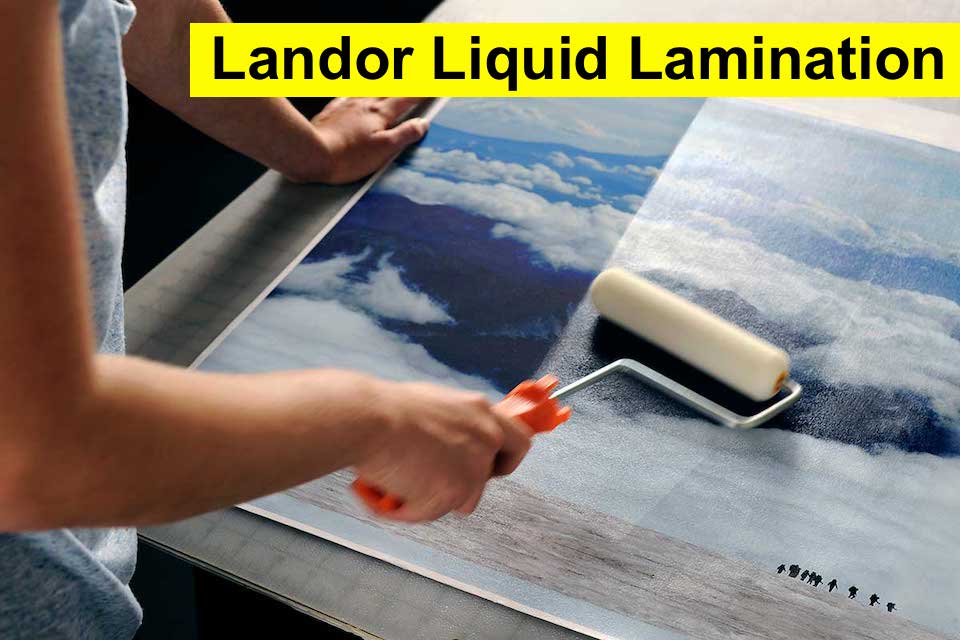
Coatings can be hand-applied with rollers, pads, brushes or spray, or run through a liquid laminator for consistent coverage on longer runs. Whichever method you use, let the print dry fully first, apply an even coat at the weight given on the product data sheet, and allow full cure before the graphic is walked on. For ClearShield, Landor advises curing at ideally no lower than 15 degrees, with better results at around 18.
For cleaning, Landor recommends a soft cloth or sponge with warm water and a mild detergent, testing any stronger product on a small area first. Avoid abrasive scrubbing, which can wear the coating and leave the surface more porous, so dirt builds up faster afterwards. Rotary floor machines and harsh floor chemicals should be checked against a coated sample before use.
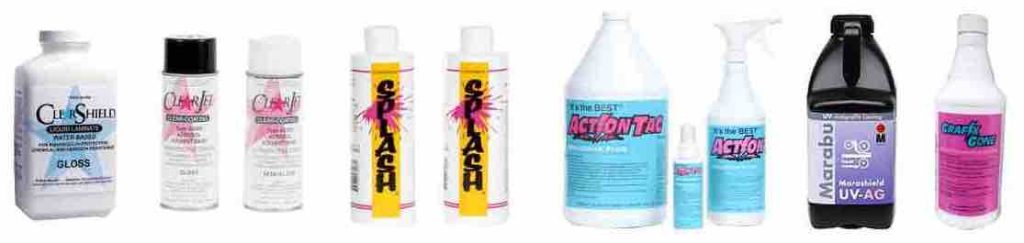
Gloss gives the best abrasion resistance in Landor’s range, and satin is a good lower-glare alternative. Matt may show abrasion marks sooner on a busy floor.
Landor’s published information does not make slip-resistance claims for its coatings. Check the slip rating of your floor media with its manufacturer, confirm the coating is compatible, and test before installation.
It depends on the coating, film weight, temperature and airflow. Check the product data sheet or ask Landor, and allow full cure rather than just touch-dry.
Call +44 1252 624411 or email info@liquid-lamination.co.uk for advice, samples and pricing.
