
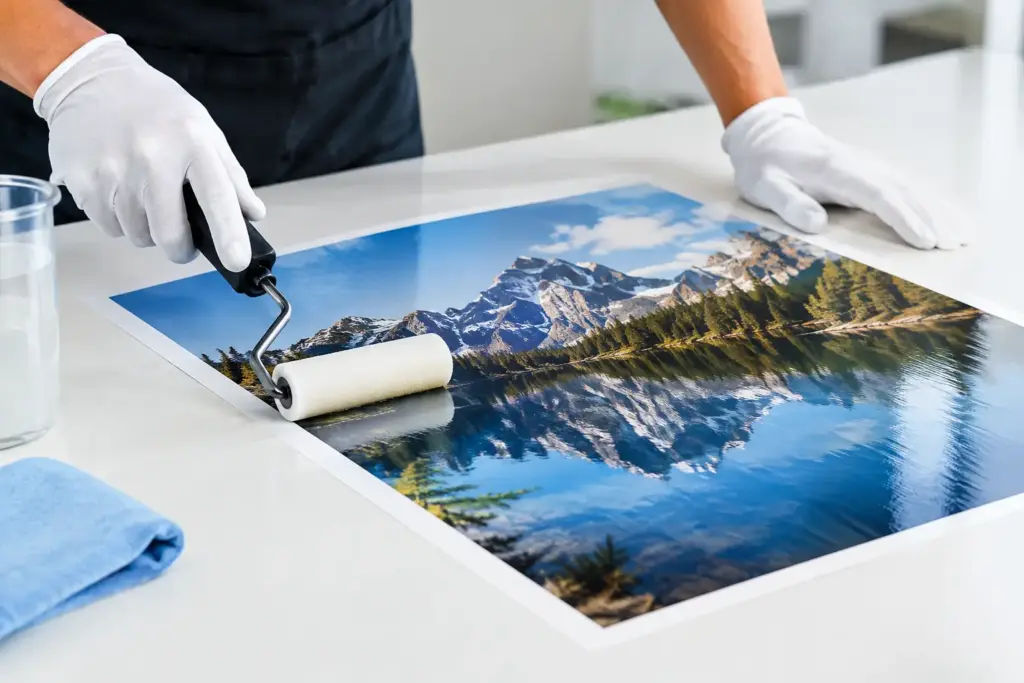
A fine art print can leave the printer looking exceptional, then lose its value during mounting, transport or its first few months on display. Fine art coatings are designed to prevent that decline without masking the character of the artwork. They add a clear, protective layer that helps preserve colour, surface finish and perceived quality where uncoated prints are vulnerable to scuffs, fingerprints, moisture and sunlight.
For giclée studios, photographers, artists and print businesses, the decision is not simply whether to coat. It is about selecting a coating system that complements the substrate, ink set and intended environment. A gloss photographic edition, a textured canvas reproduction and a framed art print for a busy hospitality setting each face different risks and need a different response.
Why Fine Art Prints Need Protection
Pigment and dye-based inkjet prints are valued for their detail, tonal range and colour accuracy. Yet the printed surface remains exposed. A print can be marked while being trimmed, creased during packing, damaged by condensation in transit or dulled by repeated cleaning once installed. Canvas is often particularly susceptible to abrasion around stretcher-bar edges and corners, while smooth fine art papers can show handling marks immediately under gallery lighting.
UV exposure is another practical concern. Even where archival inks and papers are specified, prolonged daylight can affect the appearance of an image over time. The right liquid coating contributes an additional protective barrier, helping to reduce the effects of UV light, airborne dirt and environmental pollution. It also makes the surface easier to clean, which matters for artwork installed in retail, public spaces, healthcare environments and commercial interiors.
Protection should not come at the expense of the image. Conventional film laminates can be unsuitable for textured papers, canvas, delicate inkjet surfaces and work with deckled edges. They may flatten a tactile finish, create silvering, alter reflectivity or introduce adhesive-related issues. A purpose-selected liquid system follows the printed surface more naturally and can be applied in a finish that supports the original creative intent.
Choosing Fine Art Coatings by Surface and Finish
The best coating begins with the finish the artist or print buyer expects to see. Gloss coatings intensify colour, increase apparent contrast and give photographs or high-impact artwork a polished visual depth. They are often effective for photographic canvas, contemporary décor prints and editions where a vibrant, saturated result is wanted.
Matt coatings reduce glare and retain a softer, more traditional presentation. This can suit fine art papers, watercolour-style reproductions and images intended for bright interiors where reflections would distract from the artwork. The trade-off is that deep blacks and saturated colours may appear less intense than they do with gloss. Satin or lustre finishes offer a useful middle ground, supplying improved depth and cleanability with lower reflectivity.
Texture matters as much as sheen. Fine art papers vary widely, from smooth baryta-style media to heavily embossed cotton rag. Canvas may have a pronounced weave that contributes to the image’s character. A coating should protect these features, not fill them in or leave uneven coverage. Coating weight, viscosity, application method and drying conditions all influence the result. Test coating a representative print before committing a full edition, especially when changing paper, ink, printer profile or artwork finish.
Consider the ink, not only the substrate
A coating must be compatible with the ink technology as well as the media. Water-based pigment ink, dye ink, solvent, latex and UV inks behave differently, and each can respond differently to wet coating, curing and handling. Insufficiently dried prints may show ink movement, uneven gloss or reduced adhesion. Allowing the print to dry and stabilise properly before coating is a straightforward step that prevents expensive remakes.
Water-based liquid coatings are often a practical choice for fine art and digitally printed applications because they avoid the adhesive film layer associated with conventional lamination. UV-curable systems can be highly effective in production environments where fast processing and a durable finish are required, but equipment, substrate suitability and curing control need careful assessment. The right route depends on volume, available machinery, surface sensitivity and the service life expected from the finished work.
Application Quality Determines the Result
A premium coating cannot compensate for poor application practice. Dust, silicone contamination, incorrect dilution, an unsuitable roller or spray set-up, and inconsistent film build can all compromise the final appearance. On a limited-edition print, even a small defect can turn a saleable sheet into waste.
Start with a clean, controlled workspace and handle prints using clean gloves where practical. Ensure the print is fully dry, flat and free from loose fibres. Apply an even coat at the recommended coverage rate, then allow adequate drying or curing time before stacking, trimming, stretching or packing. Rushing this stage is a common cause of blocking, surface marking and edge damage.
For smaller studios, a starter kit and a controlled manual application process can provide a cost-effective route into coating canvas and giclée work. Higher-volume producers may benefit from roller coating, spray equipment or UV-curable machinery to improve consistency and throughput. The objective is the same in both cases: a uniform protective layer that does not distract from the image.
Test for the conditions the artwork will actually face
A framed print sold for a private home has a different protection requirement from a large wall graphic in a hotel corridor or a printed canvas installed in a public venue. Ask where the work will live, how often it will be touched, whether it will be cleaned and how much daylight it receives. This prevents over-specifying a finish for low-risk artwork, while ensuring demanding installations are not left under-protected.
Where repeated cleaning is expected, chemical resistance and washability become central considerations. For high-touch applications, anti-microbial coating options may be relevant alongside the visual finish. For work exposed to outdoor light, transport wear or high levels of public contact, focus on abrasion resistance, UV protection and long-term adhesion rather than appearance alone.
Protection That Supports a More Sustainable Print Offer
Replacing damaged prints carries a cost beyond materials and labour. It uses more ink, media, packaging, transport and production time, while disrupting delivery schedules and reducing confidence in the finished product. Extending the usable life of a print is therefore both commercially sensible and environmentally responsible.
Liquid coatings can help print businesses offer an alternative to plastic-based finishing films where those films are unsuitable or unnecessary. They can protect printed surfaces while retaining the qualities that make fine art reproduction valuable: texture, detail, controlled sheen and faithful colour. The key is to specify the coating as part of the print system from the outset, not as an afterthought when damage has already become a problem.
Landor Liquid Lamination supports this application-led approach with coating systems selected around the print, substrate and environment rather than a one-finish-for-everything solution. For edition work, décor print and commercial art display alike, technical guidance and a test process are worth building into production.
A finished print should arrive looking as considered as it did when it came off the press. Choose the protective finish early, test it on the actual artwork and substrate, and make surface durability part of the value you deliver to every buyer.
