
A vehicle graphic can look immaculate when it leaves the print room, then lose its edge after a few weeks of road grime, wash chemicals, hand contact and abrasion. A digitally printed wallcovering can face a different threat: repeated cleaning in a corridor, retail space or healthcare setting. The choice between waterborne coatings versus solvent films affects not only the look of the finished print, but also its service life, handling, waste profile and suitability for the substrate.
For print producers and installers, this is not simply a choice between two ways to finish a graphic. It is a decision about where the protection sits, how it performs under pressure and whether the process supports the application rather than creating another point of failure.
Waterborne coatings versus solvent films: the key difference
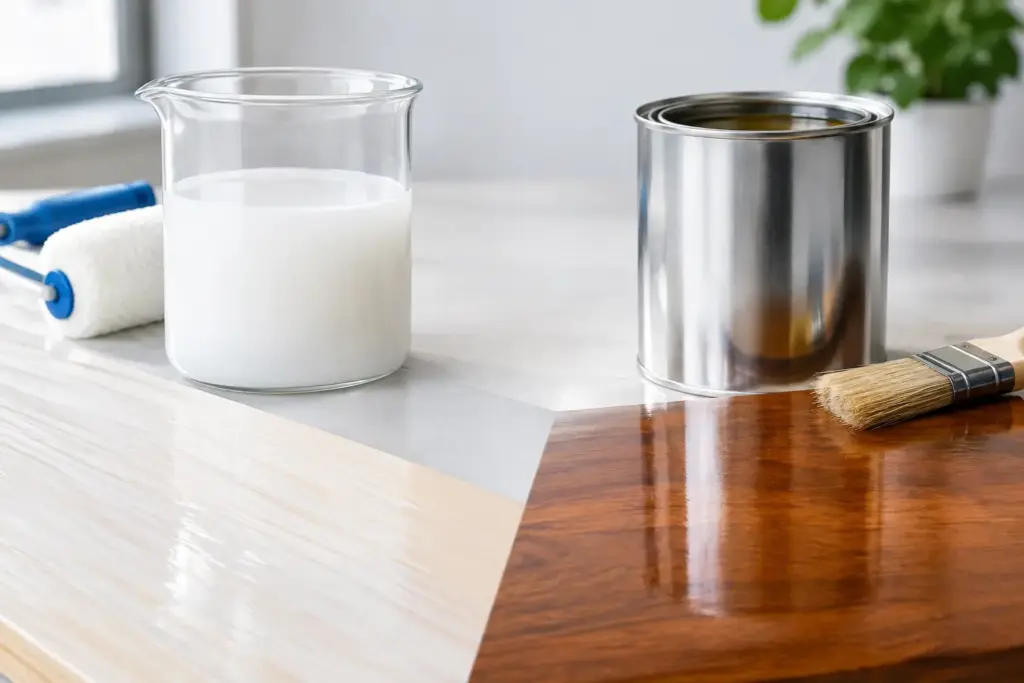
Waterborne liquid coatings are applied as a fluid layer over the printed surface, then dried or cured to create a protective finish. Depending on the product and application method, they can be roller-coated, sprayed or applied through dedicated coating equipment. The coating conforms to the surface, including textured media, contours and many printed materials where a conventional film may be difficult to apply cleanly.
Solvent films, more commonly described in the graphics industry as adhesive laminate films, are pre-manufactured plastic layers applied over the print. They provide a familiar physical barrier and can offer dependable results when the film, adhesive, ink, print media and intended exposure have been correctly matched.
The distinction matters because adhesive films bring their own construction: a face film, adhesive and release liner. Each layer has to perform over time. Liquid coating systems create protection directly on the print, without introducing an adhesive bond across the graphic face.
Neither route is automatically right for every job. A short-term indoor promotion on a flat, stable panel may be well served by a compatible film. But for demanding graphics, awkward surfaces, high-touch print or work where plastic reduction matters, a water-based liquid laminate can be the more practical finishing method.
Where adhesive films can create problems
Film lamination has been a standard finishing process for years, particularly for flat signage and graphics. Its limitations tend to become apparent when the job moves beyond ideal production conditions.
On large-format work, operators must avoid silvering, bubbles, creases, contamination and uneven tension. Film can be difficult to apply over heavily textured print media, canvas, wallcoverings, rivets, compound curves and irregular surfaces. Edge lift is another concern, especially where graphics are exposed to weather, regular cleaning or repeated handling.
The adhesive layer also deserves attention. Adhesive performance can be affected by surface energy, ink type, residual solvent, curing time, temperature and the profile of the substrate. A laminate that looks satisfactory at installation may later show lifting, tunnelling or adhesive-related failure at edges and stress points.
There is also a material consideration. Conventional overlaminate film adds plastic, liner waste and often a more complex end-of-life route to a printed graphic. This does not make film unacceptable, but it does mean that the environmental cost should be considered alongside the purchase price and familiar workflow.
Why waterborne liquid protection suits demanding print
A correctly selected waterborne coating is designed to enhance, protect, preserve and extend the life of the printed image. Rather than relying on an adhesive layer, it forms a clear protective surface that can be specified for gloss, satin or matt appearance, as well as for particular resistance requirements.
For wide-format graphics, the visual benefit can be immediate. Coatings can enrich colour density, create a more consistent surface sheen and reduce the visual disruption caused by reflected light when a matt or low-sheen finish is required. On fine-art reproductions and canvas prints, the right coating can protect the image while retaining the intended character of the artwork rather than giving it an unwanted plastic-film appearance.
More importantly, the protective layer can be selected around real risks. These may include scuffing during transport, UV fading on external signage, moisture on vehicle graphics, stains on interior displays or regular cleaning in public environments. Specialist liquid systems can also provide chemical resistance, anti-graffiti performance or anti-microbial protection where the application calls for it.
This is particularly valuable for high-contact surfaces. Reception graphics, retail displays, exhibition panels, menus, digitally printed wallcoverings and public-facing branding are handled, wiped and knocked far more often than many specifications allow for. Protection should be chosen for the way the print will actually be used, not solely for how it appears on the day of installation.
Finish quality is not just a cosmetic decision
Gloss, satin and matt finishes change how a print is seen, but they also influence practical performance. A gloss finish may deepen colours and increase visual impact on promotional graphics. Satin can offer a balanced, premium appearance with lower glare. Matt finishes are often preferred for wall graphics, art prints and spaces with strong lighting, where reflections would distract from the image.
The correct choice depends on the ink, media, viewing conditions and intended cleaning regime. A coating trial on the actual printed substrate remains the sensible approach, particularly for critical brand colour, uncoated papers, textured wallcoverings or specialist ink sets.
Comparing durability, workflow and cost
The strongest comparison is not film versus coating in the abstract. It is performance per application.
Film may be the efficient choice where a business already has laminating equipment, trained operators and a repeatable run of flat graphics using well-proven material combinations. It provides an immediate, tangible surface layer and can be familiar to customers who specify a particular laminate construction.
Waterborne coating can reduce steps and material handling where coating equipment is integrated into production. It removes the need to align, mount and trim an adhesive film, and it can avoid the failures associated with film edges. For oversized graphics, printed wallpapers, canvas, flexible surfaces and applications with detailed contours, this can make a substantial difference to production confidence.
Cost should be measured beyond the price per square metre. Consider consumables, liner disposal, rework, operator time, storage, freight, installation risk and the cost of replacing a failed graphic. A lower-cost finish that needs replacing early is rarely a commercial saving.
Drying and handling time must also be planned. Waterborne systems need appropriate drying conditions to achieve their intended performance. Temperature, humidity, coating weight, substrate absorbency and ventilation all influence the process. Production teams should validate the coating method, dry time and cure window before committing to a volume run.
Environmental considerations without greenwashing
Waterborne does not mean impact-free, and solvent film does not mean every film is unsuitable. Responsible specification requires more than a label. It means looking at the coating chemistry, application efficiency, waste created, expected graphic life and whether the finished item can be managed sensibly at end of use.
That said, water-based liquid protection offers a clear route to reducing reliance on plastic overlaminate films and release liners. It can also support longer graphic life, which reduces the frequency of reprints and replacements. For organisations managing large estates of signage, fleet branding, public displays or interior graphics, that reduction in replacement demand can be commercially and environmentally meaningful.
The most credible sustainability claim is a practical one: use only the protection needed, apply it efficiently, make the graphic last, and avoid unnecessary material layers.
Choosing the right protection for the job
Start with the exposure, not the finish. Ask whether the graphic will be indoors or outside, flat or textured, short-term or long-term, lightly viewed or repeatedly handled. Establish whether it will meet cleaners, fuel splash, road contaminants, graffiti, damp, UV light or physical abrasion. Then assess the ink, media and production route.
For example, a digitally printed wallpaper in a busy venue may need a low-glare finish that withstands routine cleaning without altering the texture or causing film-edge issues. A vehicle fleet graphic may require a flexible, durable coating system that helps protect against weathering and wash damage. A fine-art studio may prioritise clarity, UV protection and an authentic surface appearance. These are different jobs, and they deserve different specifications.
Landor Liquid Lamination works from this application-led principle: match the coating system to the failure risk, then prove the process before production. A sample or demonstration can identify compatibility issues early, while technical guidance helps teams set realistic expectations around appearance, cure time and durability.
Protect the print before the damage begins
The best finishing decision is made before the first print is produced. Specify protection alongside the ink, media and installation environment, not as a final add-on when the graphic is already vulnerable.
Whether a job calls for film or a waterborne liquid coating, the standard should be the same: a finish that preserves the intended appearance, stands up to real use and helps the print remain an asset rather than becoming an early replacement cost.
