
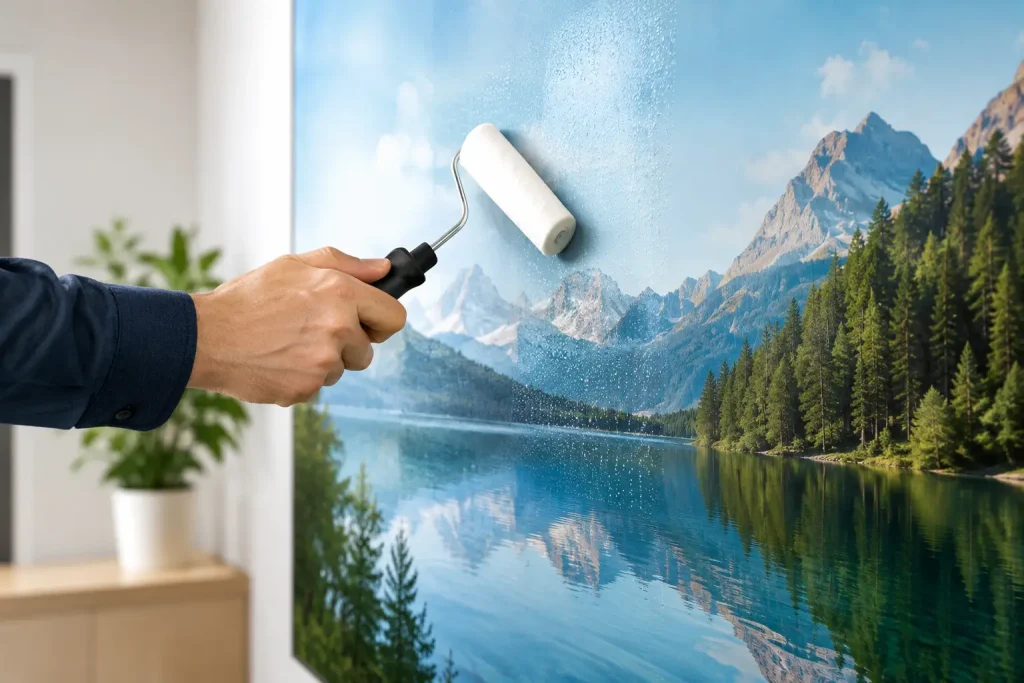
A reception feature wall can look exceptional on installation day, then quickly lose its impact where bags, chairs, fingers, cleaning products and trolley traffic meet the print. A protective coating for digital wallpaper gives digitally printed wallcoverings the extra performance needed to remain presentable in places where ordinary decorative finishes are simply not enough.
For print producers, installers and facilities teams, the question is not whether a wall receives contact. It is how much contact it receives, what it may be exposed to, and whether the chosen coating preserves the intended finish of the image. The right liquid coating protects the print without covering it in a separate plastic film, helping maintain visual quality while extending service life.
Why digitally printed wallpaper needs added protection
Digital wallpaper is often specified because it can transform an interior with brand imagery, artwork, wayfinding or a bespoke decorative scheme. Yet the inks and media that create that flexibility can remain vulnerable after installation. In corridors, hospitality venues, schools, retail environments, workplaces and healthcare settings, damage tends to build gradually rather than arriving as one obvious failure.
Repeated touching can polish or mark the surface. Shoes, bags and furniture can scuff lower wall areas. Moisture and routine cleaning can affect an unprotected print, while airborne dirt and greasy fingerprints reduce colour clarity. Near glazing or in bright spaces, UV exposure can also shorten the useful visual life of the graphic.
Replacing damaged wallpaper is disruptive. It can involve reprinting, rematching colour, closing off an area and paying for installation again. Protecting the image at the production stage is usually the more commercially sensible decision, particularly for a branded interior or a large, continuous mural.
What a protective coating for digital wallpaper does
A liquid laminate forms a clear protective layer over the printed face of suitable wallpaper media. Unlike an adhesive laminate film, it is applied as a coating and dries or cures to create the required surface protection. This avoids the edge-lift, trapped contamination and application limitations that can make films impractical on certain wallcoverings, textures or large-format installations.
The coating can be selected to improve resistance to abrasion, water, dirt, common cleaning chemicals and repeated handling. It can also provide UV protection to support longer-lasting colour. The exact performance depends on the coating system, the ink set, the wallpaper construction and the level of exposure, so it is essential to match the finish to the real installation conditions rather than treating every wall as a low-risk decorative surface.
A well-chosen system should preserve the character of the print. For example, a fine-art style mural may require a low-sheen finish that keeps glare under control, whereas a vibrant retail graphic may benefit from a satin or gloss appearance that adds depth and colour intensity.
Start with the wall’s real-world risks
The most useful specification conversation begins with the location, not the coating name. A wallpaper behind a boardroom table has very different demands from one lining a hospital corridor or a restaurant entrance.
High-touch areas need resistance to hand marks and regular cleaning. Lower wall sections in public spaces require more attention to abrasion and scuffing. In cafés, leisure venues and food-service settings, the coating may need to cope with more frequent cleaning and occasional splashes. Healthcare, education and care environments may also require a system designed to support hygiene protocols, including anti-microbial protection where appropriate to the full wallcovering specification.
External-facing interior spaces deserve particular care. A graphic installed inside a glazed entrance, atrium or showroom may receive significant sunlight. UV-resistant protection helps preserve the intended colour balance, but it cannot compensate for an unsuitable ink, media or print process. The whole construction must be assessed as a system.
For demanding projects, consider four practical questions before production: how often will the wall be touched, what will it be cleaned with, what physical impacts are likely, and what finish is required by the designer or client? Clear answers reduce the risk of costly rework later.
Choose the finish as carefully as the protection
A coating is not only a durability decision. It is a visual decision that affects how the image is perceived under the lighting conditions of the finished space.
Matt finishes are frequently chosen for wallpaper because they reduce reflection and retain a softer, more architectural appearance. They suit photographic murals, museum-style displays and walls exposed to strong downlighting. However, very matt surfaces may show burnishing if they are subjected to heavy rubbing, so the required cleanability and contact level must be considered.
Satin offers a practical middle ground. It can enrich colour while keeping reflection more restrained than gloss, making it a strong option for commercial interiors where both appearance and routine maintenance matter. Gloss can deliver striking visual depth and a highly finished look, but it will show reflected light more readily and may not suit every large wall.
Textured wallcoverings need testing. A coating must cover and protect the print without pooling in deep texture, changing the intended appearance or compromising the substrate. This is where a sample panel is invaluable. It allows the printer, installer and client to approve sheen, colour, texture, adhesion and cleanability before the main run begins.
Water-based or UV-curable coating systems?
Both water-based and UV-curable liquid coating systems have a place in digital wallpaper production. The best option depends on production volume, available equipment, turnaround expectations, substrate compatibility and the required protection level.
Water-based liquid laminates are a practical choice for many print businesses. They offer a lower-plastic alternative to film lamination and can be applied to appropriate digitally printed graphics using roller, spray or coating equipment. They are particularly useful where a flexible, clear finish is needed without adding the visual bulk of a film. Correct drying conditions are essential, especially with absorbent media, because inadequate drying can affect finish quality and adhesion.
UV-curable systems provide fast curing and can suit production environments requiring efficient throughput and controlled coating application. They can deliver highly durable results, but they require appropriate machinery, curing capability and operator expertise. They are not a default replacement for water-based products. The substrate, ink technology and final use all need to be checked before committing to a process.
For smaller studios or occasional wallpaper projects, a starter kit and a controlled test process may be more appropriate than investing in a full production line. For higher-volume work, dedicated coating machinery can improve consistency, reduce handling time and make protective finishing a profitable part of the offer.
Application quality determines coating performance
Even a technically suitable coating can disappoint if the print is not fully cured, the surface is contaminated or the application weight is inconsistent. Protective finishing should be treated as a controlled production stage, not an afterthought at the end of the job.
Allow the digital print to dry and outgas in line with the ink manufacturer’s guidance. Solvent residues, moisture and surface contamination can interfere with adhesion. Keep the print area clean, check that the wallpaper media is compatible with the selected coating, and maintain a consistent application method across the full width of the graphic.
Coat weight matters. Too little material may leave insufficient protection. Too much can change the sheen, fill texture, slow drying or introduce an uneven appearance. Edge-to-edge consistency is especially important on multi-panel murals, where variation can become visible under raking light.
The installer also needs clear handling guidance. A coated wallpaper should be fully dry or cured before rolling, trimming, transporting and hanging. Protecting the print face during packing and installation prevents avoidable marks before the wall has even entered service.
Cleaning guidance protects the investment
A coated surface is easier to maintain, but it is not indestructible. Facilities teams should receive straightforward care instructions when the project is handed over. These should reflect the specific coating system and approved cleaning regime.
In most cases, prompt removal of marks using a soft cloth and suitable mild cleaner is preferable to allowing contamination to build up. Abrasive pads, aggressive solvents and unapproved chemicals can damage even a protective finish. If the site uses specialist disinfectants, test them on a retained sample before they are used across the installed wall.
This handover step is often missed, yet it protects both the wallcovering and the supplier’s reputation. A high-performance finish only delivers its full value when the people responsible for the space know how to care for it.
Specify protection before the wall is printed
The strongest digital wallpaper projects are designed as complete systems: printer, ink, media, coating, application method, installation and maintenance all working together. Landor Liquid Lamination helps print professionals select liquid protection that meets the appearance and durability demands of the job, without relying on conventional plastic laminate films where they are unsuitable.
Before approving the final production run, coat a representative sample and expose it to the conditions the wall will actually face. Test the finish under site lighting, clean it, handle it and assess it alongside the client’s expectations. That small step can turn a beautiful printed wall into a durable visual asset that continues to earn its place long after installation.
